
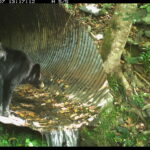
New Report
Across the nation, aging culverts and bridges quietly support the transportation network that connects communities, economies, and ecosystems. Yet, many were built decades ago for historical weather patterns and are increasingly failing under heavier rainfall and flooding.
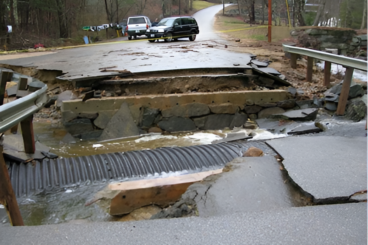
When bridges and culverts fail, they not only wash out roads — they also isolate communities, disrupt emergency access, and result in expensive reconstruction costs for all levels of government. Wildlands Network staff living in Western North Carolina saw this firsthand during and after Hurricane Helene, which pummeled the region with historic rainfall.
When we rebuild these road-stream crossing structures that are damaged by storms, we have an opportunity to choose designs that have a better chance of withstanding increased flood waters. More resilient road-stream crossing structures can also provide safe passage under the road for wildlife.
 Wildlands Network
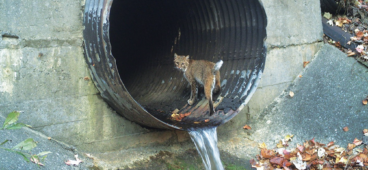
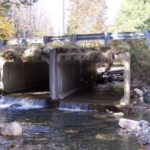
The structure above, in Western North Carolina, is not ideal for wildlife passage and is inadequate for fish passage.
Road-Stream Crossing Upgrades Support Safe Wildlife Passage and Biodiversity
In more developed areas, what remains of core habitats are often fragmented by roads and development. In highly settled landscapes, riparian buffers often serve as critical wildlife corridors, but animal movement can be restricted when those corridors meet a roadway. By replacing failing infrastructure with road-stream crossings designed to accommodate flood waters and fish and wildlife, communities can more effectively steward taxpayer dollars, improve public safety by reducing wildlife-vehicle collisions, and strengthen habitat connectivity.
 Paul Nguyen
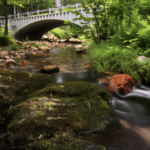
New arched underpass at Dingle Road. Published by US Geological Survey.
 Massachusetts Department of Fish and Game, Division of Ecological Restoration
Pre-replacement double box culverts. Published by US Geological Survey.
Structures above were rebuilt to be more resilient and supportive of safe fish and wildlife passage.
If we continue to build our infrastructure using the status quo designs, we can expect:
- Increased physical and genetic isolation of aquatic and terrestrial species;
- Increased aquatic mortality due to issues like reduced water quality, increased sedimentation and higher flow velocities; and
- Increased highway-related mortality for terrestrial species, especially for Threatened and Endangered Species threatened by vehicle strikes and habitat fragmentation.
To highlight this opportunity to prevent more biodiversity and infrastructure loss, and the infrastructure designs and policies that can help advance these opportunities, Wildlands Network co-authored a new report, Built to Last: Resilient Road-Stream Crossings for People, Fish, and Wildlife, in partnership with the Environmental Policy Innovation Center and ARC Solutions.
One crossing. Multiple benefits.
The report examines how road-stream crossings can be designed to deliver three benefits at once: infrastructure resilience, aquatic organism passage, and terrestrial wildlife passage.
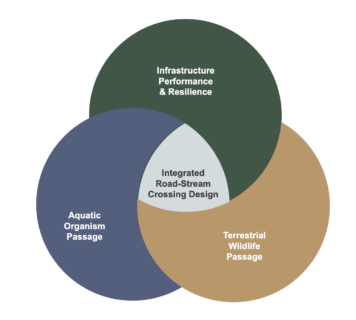
Traditionally, road-stream crossings have been designed primarily to move water beneath a roadway and prevent the road from flooding or failing. But a crossing designed with a broader view can also accommodate sediment and debris, withstand changing weather conditions, and provide safe passage for fish and wildlife.
The report calls this approach Integrated Road-Stream Crossing Design. It brings together:
- Resilience: designing structures to better accommodate current and future flows, sediment, and woody debris;
- Aquatic Organism Passage (AOP): maintaining or restoring natural stream function and passage for fish and other aquatic species; and
- Terrestrial Organism Passage (TOP): providing safe passage for wildlife moving through and across the transportation landscape.
This integrated approach can turn a single infrastructure investment into a durable public asset that provides economic, ecological, and social benefits.
Designing for the future
The need for this kind of forward-looking infrastructure is becoming increasingly clear. The report highlights a study concluding that approximately 60 percent of road-stream crossings may be undersized for today’s climate. When transportation planners move to replace or upgrade structures, we have a chance to get more return on investment from every infrastructure dollar spent by also considering wildlife.
The report also highlights examples where investments in better-designed crossings have helped avoid costly future damage. In Southbury, Connecticut, for instance, upgraded culverts performed as expected during a record 2024 storm, while other culverts and roads sustained $91 million in damage. The town estimated that damage would have been 20 percent greater had it not replaced and upgraded some culverts before the storm.
From opportunity to standard practice
Despite the clear potential, integrated road-stream crossing design is not yet standard practice.
The report draws on research, case studies, and interviews with transportation and wildlife agency staff to identify the policy, funding, data, and institutional barriers that can prevent these opportunities from being realized. It also examines policies and practices across four regions of the country — the Northeast, Southeast, Pacific, and Intermountain West — to identify emerging exemplar policies, designs, and region-specific needs.
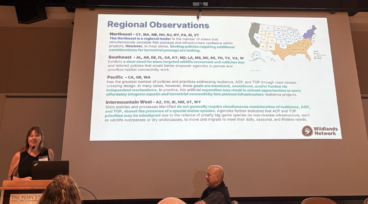
U.S. Conservation Policy Manager, Misty Boos, co-presenting with ARC Solutions on the key findings of Built to Last at the Northeastern Transportation and Wildlife Conference in State College, PA – September 2026.
Among its recommendations, the report calls for policymakers and agencies to:
- create more permanent and predictable funding for resilient road-stream crossings;
- incentivize integrated designs through federal and state grant programs;
- improve data collection on crossing conditions, wildlife movement, aquatic connectivity, and climate vulnerability;
- strengthen coordination among transportation, wildlife, and other agencies;
- incorporate resilience, aquatic passage, and terrestrial passage earlier in project planning and permitting; and
- develop policies and design standards that make integrated approaches easier to implement.
The report emphasizes that this work does not have to happen all at once. Agencies can prioritize crossings that are already in poor condition, located in flood-prone communities, or situated in areas where fish and wildlife movement is blocked. By identifying places where these needs overlap, states can maximize the benefits of limited infrastructure dollars.
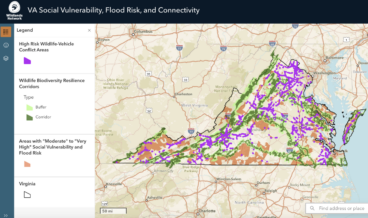
Wildlands Network recently completed its own mapping exercise by overlaying areas of social vulnerability and flood risk with wildlife-vehicle collision hotspots, habitat cores, and wildlife biodiversity resilience corridors in Virginia. Areas with overlapping needs reveal strategic locations where upgrades can both bolster infrastructure resilience, support at-risk communities, and improve ecological connectivity.
A once-in-a-generation opportunity
The nation’s transportation infrastructure is aging. Over the coming decades, communities and transportation agencies will invest enormous resources in repairing and replacing bridges and culverts.
Those investments can simply replace yesterday’s infrastructure — or they can help build a transportation network that is safer, more resilient, and better connected for the future.
Built to Last provides policymakers, transportation practitioners, wildlife agencies, and advocates with a roadmap for making that transition. As the report makes clear, designing crossings to work with nature can protect communities, strengthen infrastructure, reconnect habitat, and help fish and wildlife move across an increasingly fragmented landscape.
The opportunity is already in front of us. Now is the time to build crossings that are built to last — for people, fish, and wildlife.
This report was made possible by the generous support of The Pew Charitable Trusts.

Erin Sito | U.S. Public Policy Director, Wildlands Network
Related Posts
 Mari Galloway
 Pathways for Wildlife / Wildlands Network
 Forktailed Media
