
Setting the Stage
Why should outdoor enthusiasts and local communities care about wildlife connectivity?
Mari Galloway: Wildlife are an essential part of the healthy ecosystems that support people and enrich our experience in nature. But to continue to coexist in these landscapes, we need to make sure wildlife can access the food, water, seasonal habitat, and genetically diverse mates that they need to survive. As climate change, drought, and wildfire reshape the West, the ability of species to move across the landscape to access these resources makes connectivity even more important because it helps wildlife adapt and remain resilient in the face of these challenges.
Why are biologists paying more attention to recreation impacts on wildlife?
MG: Outdoor recreation has grown rapidly across public lands in recent decades and reached record participation levels in recent years, prompting scientists and land managers to better understand how recreation affects wildlife and natural systems. A growing body of recreation ecology research has documented a wide range of impacts, including changes in wildlife behavior that causes animals to avoid heavily used areas, shift when they are active, and in some cases, reduced survival or population abundance.
What does science-based recreation planning for people and wildlife look like in California’s Northern Sierra?
MG: Science-based recreation planning starts with understanding the landscape before decisions are made. In the Northern Sierra, that means using the best available information about wildlife, how they move, and the habitat connections they need to survive. That information should guide where recreation opportunities are located. Good information doesn’t eliminate disagreements, but it helps us identify opportunities to provide outdoor access and support local economies, while maintaining healthy, connected landscapes. Ultimately, that requires collaboration among land managers, recreation groups, Tribes, researchers, and local communities from the very beginning of the planning process.
The Challenge
What makes the Northern Sierra an important landscape for continental wildlife movement and biodiversity?
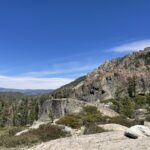
MG: The Northern Sierra is one of the most important landscapes for continental-scale wildlife connectivity because it forms a critical link in the Pacific Wildway and sits at the crossroads of several major ecoregions, including the Cascades, Sacramento Valley, and Great Basin. In addition to bridging these ecosystems, it is also one of California’s remaining largely undeveloped landscapes. Species such as mule deer, Pacific fisher, Sierra Nevada red fox, and gray wolf depend on these intact habitat connections to access seasonal ranges, disperse, and adapt to changing environmental conditions.
What are the biggest challenges in planning new trails and roads while protecting wildlife habitat in the Northern Sierra?
MG: One of the biggest challenges is that wildlife move across large landscapes while recreation projects are often implemented incrementally. Although a single trail or facility may seem minor, the cumulative effects of many projects can fragment habitat for species that are sensitive to disturbance.
Another challenge is just maintaining and managing the trails we already have. Limited agency capacity for trail maintenance, monitoring, and enforcement contribute to increased off-trail use and creation of user-made routes, expanding recreation impacts beyond their intended footprint.
These pressures are unfolding against a backdrop of growing recreation demand across the Northern Sierra, while land managers are simultaneously responding to catastrophic wildfire, climate change, forest restoration, transportation needs, and community development. Balancing these priorities requires a landscape-scale perspective that considers how individual decisions and projects add up over time to shape wildlife habitat and connectivity.
What the Workshop Revealed
What major themes emerged from the recent workshop on balancing recreation development and wildlife conservation in the Northern Sierra?
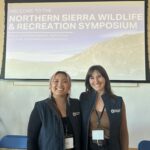
MG: One of the strongest themes to emerge from the workshop was the importance of bringing wildlife and recreation conversations together earlier. Participants repeatedly emphasized that many conflicts can be avoided when connectivity, biodiversity, and recreation goals are discussed before projects reach the design stage. Another major takeaway was that recreation and conservation are not inherently competing objectives. With earlier communication, stronger partnerships, and a shared understanding of landscape priorities, participants felt it is often possible to design projects that support both outdoor access and ecological health.
What science-based tools and best practices exist for minimizing the biodiversity impacts of recreation development on public lands?
MG: Research consistently shows that the greatest benefits come from considering wildlife early in the process, before trail alignments, facilities, or other projects are designed. Best practices include avoiding sensitive habitats and wildlife movement corridors where possible, improving existing recreation infrastructure before building new routes, using seasonal management when needed, and monitoring outcomes over time.
A growing number of science-based tools can support these decisions. One example is the Northern Sierra Wildlife Connectivity & Restoration Framework, which helps planners understand wildlife and biodiversity needs before project decisions are made.
Where the Opportunity Lies
Where are the biggest opportunities to create a lasting balance between conservation and outdoor recreation in the Northern Sierra — and beyond?
MG: The biggest opportunity is to move from reacting to conflicts to planning ahead for them. Communities don’t have to choose between a strong recreation economy and healthy wildlife populations. In fact, the two are closely connected. People visit the Northern Sierra because of its forests, rivers, wildlife, open spaces, and protecting those values helps sustain the recreation-based economies that depend on them.
The opportunity is to bring these goals together by incorporating wildlife connectivity into recreation planning, transportation projects, forest restoration, and local land-use decisions from the start.
The Northern Sierra Wildlife Connectivity & Restoration Framework was built around that idea. By identifying important wildlife movement corridors, habitat connections, and sensitive areas, it can help planners avoid conflicts and better understand where recreation and conservation objectives may be more compatible. If we can use these tools to plan proactively, the Northern Sierra can serve as a model for other regions facing similar challenges.
Making It Work Together
How can land managers, recreation groups, and conservation organizations collaborate more effectively on sustainable recreation planning in California?
MG: Effective collaboration comes from building relationships before conflicts arise. Successful recreation planning depends on agencies, recreation groups, Tribes, conservation organizations, and local communities having regular opportunities to share information, discuss priorities, and identify concerns before projects become controversial. Partners don’t always need to agree on every issue, but they do need a shared process for working through challenges together.
What lessons from the workshop can help other regions balance growing demand for outdoor access with long-term ecological health?
One lesson is that these challenges are not unique to the Northern Sierra. Across the West, communities are experiencing growing recreation demand alongside wildfire, climate change, and habitat fragmentation. The workshop highlighted the value of taking a landscape-scale approach, using the best available science, and creating forums where recreation and conservation interests can work together. Those principles are applicable almost anywhere.
 James Q. Eddy Jr.
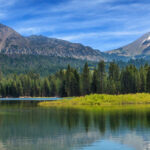
Lassen Volcanic National Park has so much to see. Mount Lassen is the focal point and stands tall at 10,457 feet above sea level. The view from Manzanita Lake is spectacular.
Looking Ahead
What specific opportunities or policy changes could advance wildlife-friendly recreation planning across California by 2030?
MG: California has already made important progress through initiatives such as California 30×30, the Room to Roam Act, the Safe Roads and Wildlife Protection Act, and Outdoors for All, which all recognize the importance of protecting biodiversity while expanding access to nature. There is a real opportunity to better connect California’s conservation and recreation goals by better integrating wildlife connectivity data and priorities into our outdoor access initiatives. As demand for outdoor recreation continues to grow, ensuring that recreation development is compatible with connected landscapes will help California support both thriving wildlife populations and meaningful access to nature for future generations.

Mari Galloway | As California Program Director, Mari Galloway works to reconnect and restore landscapes across California for wildlife and people. She works closely with staff, agencies, land trusts, and partners to foster collaboration and advance policies and projects that support wildlife connectivity and long-term conservation.
Related Posts
 Wildlands Network & NPCA
 Pathways for Wildlife / Wildlands Network
