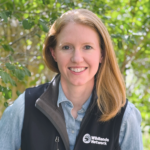
As Executive Director, Katie oversees the operations and programs of the organization. She works closely with Wildlands Network’s board of directors to ensures the financial health of the organization and leads long-term organization strategic program development and planning.
Born and raised in Salt Lake City, Katie adventured throughout the Intermountain West with her family, enjoying a childhood filled with camping, boating, and hiking. She attended Vanderbilt University in Nashville, Tennessee, graduating with a degree in Ecology, Evolution, and Organismal Biology and a minor in Corporate Strategy. Having decided on a career in environmental policy, she then attended the University of Oregon School of Law to pursue a degree in Environmental Law. Katie worked as a southwest public lands campaigner for the Center for Biological Diversity before joining the Wildlands Network in 2016.
Katie lives in Salt Lake City with her husband and two children, where they enjoy hiking in the Wasatch Mountains and exploring Utah’s fabulous public lands. In her spare time, Katie enjoys getting creative in the kitchen and reading anything she can get her hands on. She also tries to enjoy running.
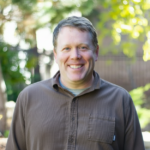
Dr. Ron Sutherland leads and coordinates Wildlands Network’s science programs across North America, with an emphasis on habitat connectivity mapping, road ecology, and species conservation. He also directs an extensive camera-trapping project in the red wolf recovery area in North Carolina, and is an enthusiastic public advocate for red wolf conservation. Ron has testified on conservation matters before Congressional staff in DC on several occasions, and has been extensively quoted in national and international media including the Washington Post, The Guardian, USA Today, and the Associated Press.
Ron received his Ph.D. in Environmental Science and Policy in 2009 from the Nicholas School of the Environment at Duke University, where he studied the response of wildlife to urbanization and vehicle traffic in the Sandhills region of North Carolina. Ron earned a B.S. in Biology from North Carolina State University and an M.S. in Conservation Biology and Sustainable Development from the University of Wisconsin, Madison. Between 2013–2015, Ron co-led a successful and award-winning campaign to save the 79,000-acre Hofmann Forest in eastern North Carolina from being sold to and destroyed by private buyers.
Ron lives in Durham, North Carolina with his wife and three children, plus two dogs.

As Wildlands Network’s Development Director, Lindsay oversees the fundraising and community engagement efforts for strategic and critical conservation efforts, something she is deeply passionate about. Lindsay grew up in Oregon but has lived all over the West, including in Montana, Washington, and Northern California, before putting down roots in Boise, Idaho. Since graduating from the University of Montana with a degree in Organizational Communications, Lindsay has worked in the nonprofit sector for over 20 years as a fundraising and engagement specialist.
In addition to her role at Wildlands Network, Lindsay volunteers with several local nonprofits and was on the Board of the Idaho Chapter of the Association of Fundraising Professionals (AFP) for many years. She is most at peace outdoors hiking, skiing, biking, or floating magnificent rivers in Idaho and throughout the West with her husband and two daughters. Her strong travel addiction also takes her to other interesting locations whenever possible.
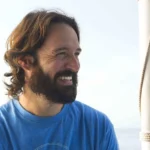
Tim has spent more than two decades communicating big ideas to inspire people to care about nature and the wild — and act on it.
As Communications Director at Wildlands Network, he leads strategy, storytelling, messaging, and digital campaigns that bring the organization’s mission to life — from wildlife crossings in California to jaguar corridors in Mexico. His work connects the science and policy of rewilding to the public will needed to make it happen.
Before joining Wildlands Network, Tim spent nearly 18 years at Conservation International, where he led communications initiatives across ocean, science, and climate — working alongside conservation leaders, scientists, executives, and policymakers to turn complex conservation challenges and solutions into campaigns that move people, policy, and investment.
Twenty years in, he’s still driven by the same conviction: the right idea, with the right story, told well, can change everything.
Email Tim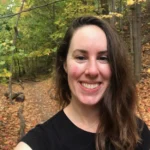
Caitlin handles all things financial at Wildlands Network. She grew up in the suburbs of Detroit, making regular trips up north to take in Michigan’s beauty. She then took a circuitous route to Salt Lake City, both in career and geography, spending time learning and growing in St. Louis, Dallas, San Francisco, and Iowa City before landing in the Wasatch. Along the way, she’s worked at art museums, advertising agencies, a Greek-American restaurant (Olga’s Kitchen for those in the know), the Stanley Center for Peace and Security, and most recently, as head of finance and operations for a personal finance media company focused on women. She derives intense joy from hiking with her dog, drinking excessive amounts of herbal tea with her husband, playing tennis and beach volleyball, and cycling around in her basket-equipped e-bike.
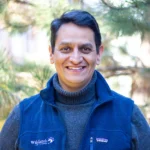
As Conservation Programs Director for the international conservation organization Wildlands Network, Juan Carlos coordinates work in four different regions of North America, advancing ecosystem connectivity across multiple landscapes, jurisdictions and cultures. He works closely with Wildlands Network’s Executive Director creating systems for effective internal collaboration between staff with different jobs, backgrounds and experiences, as a means for creating a culture connectivity and diversity that ensures the organizations puts into internal practice the values we advocate for externally.
Born in Mexico City, Juan Carlos moved in 2005 to Sonora where he played a central role in establishing and expanding the Northern Jaguar Reserve, a private sanctuary for the northernmost population of the species, which he managed for nine years. Throughout his career he was part of the team tasked with reintroducing Mexican wolves into Mexico, supported prairie dog and grasslands conservation, successfully campaigned for securing the legal certainty of the Natural Protected Area Bavispe, prevented the destruction of the best-preserved stretch of the Cocóspera river by negotiating the redirection of a highway, and had an instrumental role in the passing of novel environmental legislation in Sonora.
He is a strong advocate of international and multi-stakeholder collaboration and a cartography enthusiast who enjoys looking at complex problems that call for solutions built from diverse skills and multiple approaches. Juan Carlos is a 2021 recipient of Wilburforce’s Conservation Leadership Award.
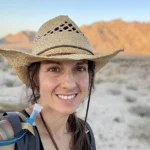
Dr. Christina Aiello acts as the California program’s wildlife biologist, where she develops and conducts research on wildlife movement, connectivity and road ecology, particularly in California’s extensive and unique desert habitats. Though she’s not a California native, Christina has spent over 14 years working on wildlife monitoring and research projects in the state. She recently relocated to Joshua Tree, CA, to fully commit to conserving the species and habitats she knows and loves.
Christina worked for the U.S. Geological Survey in Nevada on applied research designed to inform desert wildlife conservation. While there, she earned a Ph.D. in Ecology at Pennsylvania State University, where she studied the spatial and social networks of desert tortoises and their role in disease spread. She then joined Oregon State University and partnered with the National Park Service and California Department of Fish and Wildlife to better understand desert bighorn sheep movement near major highways. She helped collect and analyze data that informed the state’s overpass design for bighorn sheep along I-15 and future crossing structures along I-8. She loves to seek out new research with practical applications for managing our lands and species in increasingly human-dominated landscapes.
Christina is a first-generation scholar from the heart of Chicago but is a self-described desert rat in spirit. She loves to wander into dusty, remote wilderness and scramble up boulders for work and play. As a past field assistant once said, “She’s basically part bighorn sheep.”
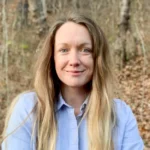
Dr. Liz Hillard helps direct and manage the study design, implementation, and analysis of our road ecology research focused on the important Pigeon River Gorge/Interstate 40 corridor within the Appalachian Mountains of North Carolina and Tennessee. In addition, she works to build partnerships and engage the public in wildlife habitat connectivity and conservation efforts throughout the Southern Appalachian region. Liz currently serves on the Board and as the Secretary for the North Carolina Chapter of The Wildlife Society.
Liz earned her Ph.D. at Southern Illinois University, studying how the alteration and fragmentation of bottomland hardwood forests influence survival and habitat selection of swamp rabbits, a species of concern. Liz’s curiosity for the intricacies of nature led her to earn a M.S. in Biology from Western Carolina University. As a graduate research assistant at Western Carolina University, Liz worked in collaboration with the National Park Service to develop and implement a research plan and field methodology to determine elk habitat selection in Great Smoky Mountains National Park. In addition to her research experience, Liz has years of experience working in the field as a wildlife technician on projects monitoring beavers, gray foxes, and grizzly bear for several public agencies, including the U.S. Forest Service, USDA-Aphis, and universities.
Liz lives in Asheville, North Carolina with her dog Peachy-Keen. She is an avid lover of music and enjoys backcountry camping and biking in the mountains of North Carolina.
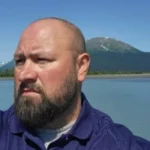
Dr. Aaron Facka serves as the Senior Wildlife Biologist for the western region conducting and coordinating research on species, core habitats and connections between. Aaron received his Bachelor of Science and Master of Science degrees from New Mexico State University and his Doctor of Philosophy in Zoology from North Carolina State University. He has spent the last 20 years working on diverse vertebrate species and their habitats. Most of his work has involved partnerships and coordination within, and across state, federal, and private agencies and groups. He has worked for the United States Forest Service, California Department of Fish and Wildlife, New Mexico State, North Carolina State, Oregon State Universities. Most recently Aaron served as the furbearer biologist for the Pennsylvania Game Commission before the allure of returning ‘home’ brought him back to New Mexico.
Since 2009, he has worked primarily for carnivore conservation and management in forested ecosystems including leading the reintroduction of fishers (Pekania pennanti) into the northern Sierra Nevada of California. spent a lot of time working in grassland and desert ecosystems in the Southwestern United States where he studied prairie dogs, kangaroo rats, and even dabbled in trapping and tracking rattlesnakes. Aaron has worked on reintroduced populations of fishers, black-footed ferrets, and prairie dogs and that has become a central theme of his research.
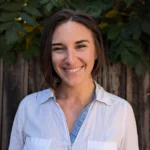
As California Program Director, Mari Galloway works to reconnect and restore landscapes across California for wildlife and people. She works closely with staff, agencies, land trusts, and partners to foster collaboration and advance policies and projects that support wildlife connectivity and long-term conservation.
Raised on a farm in California’s San Joaquin Valley and spending summers in the Sierra Nevada, Mari developed an early connection to the landscapes (and highways) that now shape her work. She attended Cal Poly Humboldt, where she earned a degree in Environmental Science, and later earned a law degree from the University of Oregon. In the years since, she has developed and applied legal and policy tools through Wildlands Network’s California program to ensure wildlife is considered in the policies and decisions that impact our landscapes.
Mari lives in Sacramento, where she enjoys spending time outdoors, tending her garden, cooking, exploring with her dog, and sharing laughs with friends and family.
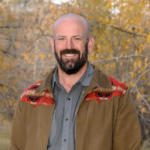
As the Western Program Director, Michael Dax works closely with the Western Wildway team to restore and maintain habitat connectivity and wildlife migration from Mexico to the Greater Yellowstone Ecosystem.
Michael grew-up in upstate New York. He earned a bachelor’s degree from Brandeis University. After college, he spent 4 years working at the Grand Canyon and Yellowstone National Parks. He worked as a tour guide, cross-country ski guide, trail groomer, bell hop, and furniture mover. He then received a masters degree in environmental history from the University of Montana where he began work on his book, Grizzly West, which focuses on the attempt to reintroduce grizzly bears to the Selway-Bitterroot Wilderness in Montana and Idaho.
Michael lives in Santa Fe, New Mexico. He has completed thru-hikes of the John Muir Trail, Appalachian Trail and Annapurna Circuit. When not working, he can be found brewing beer, backpacking, fishing, or skiing.
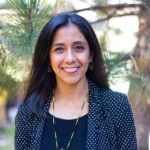
As Public Policy Director for Wildlands Network’s Mexico Program, Gina Ileana Chacón works to increase support for private lands conservation, federal Natural Protected Areas, wildlife corridors, and improved enforcement practices around wildlife protections.
Gina, born in Mexico City, earned her bachelor’s and master’s degrees in Latin American Studies and Political and Social Studies, respectively, from the National Autonomous University of Mexico. In 2013, she was granted a Hubert Humphrey Fellowship through the Fulbright Program to study post graduate courses at the Maxwell School at Syracuse University in New York.
With 15 years of experience, Gina has worked as a researcher for organizations in Mexico and the U.S., focusing on citizen participation and human rights defense. Over the last decade, she has been dedicated to conducting research and analysis of public policies within the environmental sector, focusing on areas such as budget analysis, transparency, and accountability. Gina’s dedication to enhancing public policy for environmental protection, while simultaneously advocating for human rights, motivated her decision to join Wildlands Network.
Gina is an environmentalist and feminist by conviction. From a young age she learned from her parents the love and respect for nature. Beyond her professional activities, she enjoys exploring her interests in history, has a passion for reading and traveling to explore and learn about other cultures.
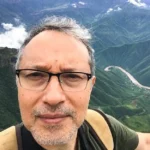
Carlos Castillo, Co-Director for the Northwest Mexico Program, advocates for the establishment of new protected areas in northwest Mexico and for the improvement of their management. As a biologist with vast experience in public management, he also helps identify wildlife corridors in Mexico, advises our public policy work, and supports the implementation of alternative land conservation mechanisms such as easements, leases, and Environmental Services Payments.
Carlos studied biology at Universidad Autónoma de Guadalajara and in 1986 landed his first job working with reptiles and mammals at the Centro Ecológico de Sonora in Hermosillo. His passion for understanding animal behavior carried him to the El Pinacate region to study the behavior ecology of the Sonoran pronghorn, listed in both Mexico and the U.S. as an endangered subspecies. Because of his 10 years of experience working in the Pinacate y Gran Desierto region, he was selected to develop the studies necessary for the designation of the El Pinacate y Gran Desierto de Altar Biosphere Reserve, where he also served as director for eight years. Carlos then went on to serve as the Northwest Regional Director for the National Commission for Protected Areas (CONANP) of Mexico’s Ministry of the Environment and Natural Resources, supervising protected areas in the states of Baja California, Baja California Sur, Sonora, Sinaloa, and Nayarit. He then became Northwest and Upper Gulf of California and Colorado River Delta Regional Director, supervising protected areas in Sonora and Sinaloa.
Carlos lives in Hermosillo, Mexico and enjoys painting, playing piano, cycling, exercising, and hiking in nature.
As the US Policy Director, Erin researches, develops, and promotes laws and policies that support habitat connectivity at the local, state, and federal level. Erin started at Wildlands Network as a Law and Policy Intern in 2018, where she was tasked with drafting model state wildlife corridor legislation. Her model legislation was subsequently adapted and passed in Oregon, New Mexico, and Virginia.
Erin is a graduate of the University of Oregon School of Law. While there, she clerked with the Bonneville Power Administration and the Regional Solicitor’s Office for the Department of the Interior. She also served as the Environmental Caucus Fellow in the 2019 Oregon State Legislative Session. Prior to re-joining Wildlands Network in 2021, Erin worked in private practice, specializing in renewable energy transactions and regulatory law and litigation. Outside of Wildlands Network, she enjoys paddleboarding, hiking with her two labs, gardening, and protecting and reestablishing native plant species at her home in Hope Valley, Rhode Island.
Abbie’s journey as a storyteller began around campfires in the Finger Lakes National Forest, where she led programming as an environmental educator. She majored in Environmental Studies at Ithaca College, working as a field research technician, collecting data on migration habits of saw-whet owls, road mortality of spotted salamanders, and white-tailed deer behavior in fragmented habitats.
After studying Graphic Design at The New School, she worked for a variety of creative agencies, collaborating on projects that ranged from websites for nonprofits to museum exhibitions. Her background is rooted in a multidisciplinary practice that combines design, writing, and strategy. Now, as Storytelling and Content Manager at Wildlands Network, Abbie crafts stories that bring the organization’s science, fieldwork, and policy to life.
Abbie lives in Brooklyn, where she keeps an eye out for her local red-tailed hawk on morning runs and hand-carves prints inspired by endangered species. On weekends, you’ll find her checking out local concerts, hiking in the Hudson Valley, or nose-deep in a book at her local park.
Nikki manages conservation projects, coalitions, and initiatives Wildlands Network is pursuing in North Carolina.
She has worked with land trusts and other natural resources agencies dedicated to solving complex issues and discovering solutions for nature by fostering collaboration and community support. Her career as a science communicator and educator spans across diverse ecosystems from the Florida Keys, to the Rocky Mountains, and the Southern Appalachian Mountains.
Nikki earned her master’s degree in plant biology at the University of Vermont in the Field Naturalist and Ecological Planning Program. She holds a Bachelor of Science in environment and natural resources from Clemson University, with a concentration in conservation biology.
Nikki is a native North Carolinian. Living in Boone, she enjoys Western North Carolina’s year-round outdoor recreational opportunities including mountain biking, hiking, snowboarding, and floating the river.
Misty is dedicated to advancing policies that champion habitat connectivity, conservation, and restoration.
She earned her B.S. in Sociology from Southern Oregon University and her Master’s in Environmental Planning from the University of Tasmania. Over the past decade, Misty served as the Executive Director of Wild Virginia, playing a pivotal role in establishing the Virginia Safe Wildlife Corridors Collaborative and spearheading successful efforts to pass legislation creating the Wildlife Corridor Action Plan for Virginia.
Misty’s passion for ensuring safe passage and movement for wildlife led her to join the Wildlands Network, where she now works to advance the development and promotion of policies that support habitat connectivity.
With deep family roots in the great Pacific Northwest, David grew up in Boise, Idaho. He earned a bachelor’s degree in Zoology from the College of Idaho. After college, he moved to Washington, DC and interned with the Sierra Club’s National Legislative Office on Capitol Hill. The internship led to several different staff roles within the organization over the course of the next decade and included stops in Concord, NH and Bozeman, MT. While in Bozeman, David held positions that included work on conserving roadless National Forest lands, serving as a communications director for Montana Conservation Voters and also with the Wildlife Conservation Society’s North America Program. In 2011, he moved to Denver, Colorado, and served as a Rocky Mountain Regional Outreach Campaigns Manager with the National Wildlife Federation. In the autumn of 2019, he accepted a senior associate position working on ecological connectivity issues in CA, CO, & NM with the Pew Charitable Trusts’ U.S. Public Lands and Rivers Conservation program in Portland, OR.
David joined Wildlands Network in the fall of 2023 to manage several projects that will advance our legacy of passing innovative state connectivity policy in Oregon and making roadways safer for both wildlife and Oregonians. Within several coalitions across Oregon, David brings a wealth of policy expertise and project management skills to the table.
When not working, David enjoys exploring all of the natural beauty that Oregon has to offer with his canine companion, Jake, remodeling his 19th-century home and learning to garden for wildlife with native Northwest plants.
As Utah Project Manager, Kasey manages Wildlands Network’s policy and project initiatives in the state to study, restore, and maintain large-scale habitat connectivity as a part of the Western Program.
Kasey graduated from the University of Utah with a degree in Environmental and Sustainability Studies and minors in Geography and Spanish. She continued at the University of Utah’s S.J. Quinney College of Law to pursue a law degree and graduated with a certificate in Environmental and Natural Resources Law. Kasey was a clinical student at S.J. Quinney’s Environmental Justice Clinic, managing several advocacy projects in partnership with Indigenous communities in southern Utah. She also worked with numerous environmental organizations across the country, including Advocates for the West, Sierra Club, and Earthjustice.
Kasey lives in Salt Lake City and enjoys rock climbing and skiing across the Intermountain West as well as reading, obsessing over sudoku puzzles, playing tennis and pickleball, and attempting to skateboard.
As the foundation relations and grants manager, Lucy leads the organization’s efforts to identify and engage foundation partners whose interests align with Wildlands Network’s mission. While managing a grants portfolio of foundations, governments, and major donors, she works closely with program staff to develop grant proposals and reports and ensure donor stewardship.
Lucy’s desire to support meaningful work that has landscape-level impacts stems from her science background in grassland and avian ecology. Since studying biology at Clemson University and implementing conservation programs for the National Audubon Society, she has become a certified development professional and gained almost a decade of nonprofit experience.
In her spare time, she enjoys trail running, hiking, birding, and traveling to visit the amazing wild spaces we’re fighting to protect across North America.
Daniel facilitates joint activities of 7 Mexican environmental organizations that make up the NOSSA coalition, whose objective is to strengthen the protection of Natural Protected Areas throughout the country, with emphasis on the Northwest.
Daniel holds a bachelor’s degree in International Relations from the National Autonomous University of Mexico (UNAM) and further studies in Social Impact and Indigenous Consultation in the Latin American Faculty of Social Sciences, and Intensive Care Transportation in the School of Medicine of UNAM along with lifelong learning courses and seminars on the social and environmental impacts of climate change.
In 2021, he was awarded as All-Decade Honoree for his participation in the Eugene Scassa Mock Organization of American States at St. Mary’s College in El Paso, and Baylor University, in Waco, Texas.
Working from both civil society organizations and international organizations, Daniel has actively advocated for the inclusion of vulnerable populations, indigenous communities and migrants in the implementation of environmental and climate change public policies in Mexico.
Father to one kid, three dogs and a couple cats, Daniel is a search and rescue dog handler and volunteer paramedic who still enjoys the simplicity of navigating traffic on his bike and watching the urban fauna of public parks in Mexico City.
Kevin graduated with a B.S. in Wildlife Management from Lake Superior State University in Michigan. He has a vast experience in mammalian ecology, and has focused his career on implementing techniques study and conserve various wildlife species. He has had the opportunity to study fisher, marten, Sierra Nevada red fox, Black-footed ferrets, white-tailed deer, and a variety of bat species. Kevin most recently worked for the Integral Ecological Research Center in northern California examining interactions between wildlife and cannabis grows and mitigating the effects of illegal grows on public land. In his free time, Kevin enjoys backpacking, brewing, board games, and cooking.
As the GIS Specialist, Alex provides support for all of Wildlands Network’s mapping and landscape analysis projects.
He also works closely with the Chief Scientist to develop new habitat-connectivity models. As a scientist and conservationist, Alex is especially interested in conserving and restoring habitat connectivity in urban spaces.
Ed Marx serves as Northeast Project Manager. He conducts outreach and develops collaborative partnerships in New York, Pennsylvania, Vermont and New Hampshire. Ed also contributes to public policy, landscape analysis and road ecology project development in support of the Eastern Wildway.
Ed joined Wildlands Network in 2019 after retiring from his position as Commissioner of Planning and Sustainability for Tompkins County, New York. Ed wanted to turn his attention to his passion for wildlands. During his 30-year career leading county planning agencies in NY State Ed advanced many conservation initiatives including development of innovative funding mechanisms for land protection and creating new parks on Lake Ontario and the Tug Hill Plateau. He collaborated with the Finger Lakes Land Trust on a New York State Open Space Plan project to connect 50,000 acres of public land in the southern Finger Lakes region and initiated a wildlife corridor study for an important link in that landscape. While serving as Director of Planning and Community Development for Oswego County Ed worked closely with The Nature Conservancy, the New York State Department of Environmental Conservation and other partners to conserve the Eastern Lake Ontario Dune and Wetland system, the Oswego River Canal Corridor and the Salmon River Greenway.
Ed earned his undergraduate degree in Natural Resource Economics from Cornell University and his Master’s of Planning and Community Development from the University of Colorado at Denver. He lived for ten years in Colorado where he served as an economics and planning consultant on projects throughout the West and spent much of his free time backpacking the wilderness areas of Colorado and Montana.
Ed lives in Skaneateles, New York where he and his partner enjoy hiking and kayaking on the Finger Lakes, Lake Ontario, and in the Adirondacks. They also spend time at her ancestral family home in the Northeast Kingdom of Vermont.
Lindsay’s love for wild places and the wonderful creatures that inhabit them is deeply embedded in her identity and informs much of what she spends her life doing. She is thrilled to be able to work for an organization that advocates for wild places and essential connections that sustain the West’s biodiversity.
Lindsay has worn many hats in her professional career, working for corporations, family businesses, and in remote field locations throughout the American West and in Alaska. From these, she brings characteristics such as leadership, organization, adaptability, and dependability to her role with Wildlands Network.
Lindsay lives in Salt Lake City with her husband and two young kids and enjoys gardening, hiking, camping, and river running in her spare time.
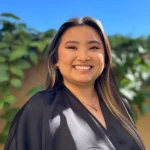
Michelle Gin is the California Program Coordinator at Wildlands Network, where she supports their California conservation work.
Her love for the outdoors began with annual family vacations to Lake Tahoe, leading her to earn her bachelor’s degree in Wildlife, Fish, and Conservation Biology from the University of California, Davis. Over the past eight years, Michelle has worked in the conservation and environmental fields, gaining experience as a project manager, wildlife rehabilitator, and outdoor educator. During her previous role as Green 2.0’s Program Manager, she led programs like the launch of a Mentorship Database to connect hundreds of mentors and mentees and the revamp of their Transparency Report to focus on employee engagement experiences. Her work at the San Diego Humane Society’s Project Wildlife solidified her passion for people driven conservation work, during which she established wildlife care protocols, improved onboarding efficiency, and created career growth opportunities for staff.
Michelle combines her love of birds and art through painting as her creative outlet. Outside of work, you can find her spending time with loved ones trying new restaurants, going to the beach, and playing board games. She also enjoys reading fantasy novels while her two cats fight for a spot on her lap.

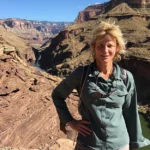
Fascinated by wilderness and everything wild since growing up backpacking with her family in the Sierras, Jeanne pursued a diverse environmental career over the past 30+ years. With a Bachelor’s in Biology (Carleton College) and a Master’s in Geology (Oregon State University), she pursued multiple aspects of environmental protection, with the last 23 years focused on ecological conservation, working for The Nature Conservancy, US Fish & Wildlife Service, and the US National Park Service. During her ten years at TNC, Jeanne was responsible for on-the-ground conservation in four ecoregions in Arizona, management of TNC’s preserve system, land management and restoration, government relations, and water policy.
Jeanne spent seven years with the USFWS where she oversaw threatened and endangered species issues in southern Arizona. She enjoyed the challenges of dealing with controversial issues such as the international border, proposed mining projects, energy infrastructure, wilderness management and climate change.
Most recently, she worked for Grand Canyon National Park as Chief of the Science and Resource Management Division, where she oversaw all science research as well as natural and cultural resource management activities in the park. During her years at the Grand Canyon, Jeanne initiated the first Paleontological Resources Inventory for the park, led a Climate Change Analysis for the park’s watershed, reinitiated the effort to designate 94% of the park as Wilderness, and led publication of the Natural and Cultural Resource Condition Assessment for the park.
Recently retired, Jeanne has a passion for water sports, hiking and exploring Arizona’s spectacular landscapes, is improving her Spanish and learning how to play the saxophone.
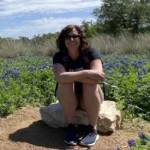
Kerston Swartz has a long career in government, non-profits, and public engagement. She has worked for Woodland Park Zoo in Seattle, WA, since 2014, focusing on building state and federal conservation policy work, strengthening partnerships with governments and agencies, working at the national level with other zoos and aquariums on advocacy, and helping to ensure public support. Before joining the zoo, Kerston worked on the Alaskan Way Viaduct project, helping to disseminate viaduct removal and tunnel building communications to the downtown and Pioneer Square communities. Kerston has a Master of Public Administration from the University of Washington Evans School.
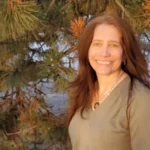
With over 25 years of experience in environmental work, Karina is passionate about collaborating in the transformation to a world with a clean environment, rich biodiversity, accessible clean water, and food security for all. She has collaborated with esteemed international organizations like the United Nations University Program for Water, Environment, and Health, as well as Industry Canada’s Sustainable Cities program. Her journey has also involved partnerships with prestigious Canadian and European institutions across private and NGO sectors, spearheading projects in Canada, Mexico, and Latin America.
Currently pursuing a Ph.D. in Environmental Sustainability at the University of Ottawa, Karina’s doctoral research focuses on enhancing policy design and evaluating financial mechanisms to support ecosystem-based agricultural management, ultimately striving for improved environmental outcomes and societal well-being.
Karina is actively engaged in research alongside the Smart Prosperity Institute. Her academic journey includes a bachelor’s in biochemical engineering with a focus on marine resources management from ITESM, an M.Sc. in environmental engineering from the University of Guelph (Canada), and an M.A. in environmental economics and public policies from the Instituto Tecnológico y de Estudios Superiores de Monterrey (ITESM).
Beyond academia, Karina is a climate leader with Climate Reality and the proud founder of a non-profit E-NGO dedicated to promoting eco-friendly solutions for climate change adaptation and mitigation. She is deeply involved in the community, volunteering as a board member with Wildlands Network and serving on the Technical Committee of the think tank “Hermosillo ¿Cómo Vamos?” focusing on water and environmental issues. She also conducts training sessions and conferences on climate change solutions and contributes articles to local and national media outlets.
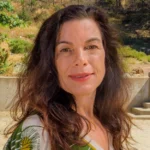
Dr. Micheli brings more than 30 years of experience applying her technical, policy, and fundraising expertise to the design and implementation of ecological restoration, research, and education programs. She started her career at the US Environmental Protection Agency and then completed her graduate studies at UC Berkeley as a NASA Earth Systems Research Fellow in 2000. She now focuses her research on relationships between climate, watershed health, wildfire, and biodiversity, and has published numerous peer-reviewed studies.
Dr. Micheli specializes in facilitating interdisciplinary collaborations focused on using relevant research to craft collective solutions to today’s most pressing landscape conservation challenges. She serves as the co-chair of Pepperwood’s Terrestrial Biodiversity Climate Change Collaborative (TBC3) with Dr. David Ackerly, Dean of UC Berkeley’s Rausser College of Natural Resources. She has been recognized as a Phi Beta Kappa scholar, a Robert and Patricia Switzer Foundation Environmental Leader, a Bay Nature Local Hero, a Fellow of the California Academy of Sciences, and a 2020 Global Fulbright Fellow. She is a member of the American Geophysical Union and the Society for Conservation Biology.

Arjun Singh Sethi is a human rights lawyer, author, filmmaker, and law professor based in Washington, D.C. He works closely with Muslim, Arab, South Asian, and Sikh communities and is an expert in policing, the war on terror, and racial and religious profiling.
Arjun’s work has appeared in numerous national outlets, including CNN, The Guardian, Politico Magazine, USA Today, and The Washington Post, and he has been widely quoted in print, radio, and television, including by The New York Times, The Independent, BBC World Radio, and NPR. In the wake of the 2016 presidential election, Arjun traveled the country and met with a diversity of people to documented the hate they experienced in connection with the election. His book, “American Hate: Survivors Speak Out,” was named an NPR Best Book of 2018.
Arjun serves as co-chair of the American Bar Association’s National Committee on Military Justice and Homeland Security, and he is an adjunct professor at Georgetown University Law Center and Vanderbilt University Law School.

Tom Huang is an assurance senior manager at Ernst & Young based in Dallas, Texas. He works with companies to ensure financial statement compliance (i.e., generally accepted accounting standards and governmental accounting standards) and risk and regulatory compliance (i.e., internal policies and applicable laws and regulations). In his role, he also develops and monitors budgets to ensure timelines and goals are met, facilitates trainings on new auditing, accounting, and regulatory methodologies, and engages with the company’s Board of Directors to provide insights into process improvements and best practices.
Outside of work, Tom enjoys spending time walking the trails in Dallas, creating ceramic bowls and cups, practicing yoga, and, whenever possible, attending a Broadway play or musical.
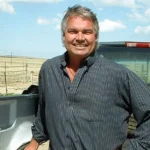
Steve Olson received his B.S. and M.S. degrees in Wildlife and Natural Resources Management from Colorado State University. Steve joined the Association of Zoos and Aquariums (AZA) in 2000 as Director of Governmental Affairs.
Beginning in 1985, Steve worked for the Texas A&M Sea Grant College Program researching marine mammal and protected marine area management issues, and in 1987, he was selected as a John Knauss Sea Grant Fellow for the U.S. House of Representatives’ Merchant Marine and Fisheries Committee. Since then, he has served as Director of Federal Relations for the National Association of State Universities and Land-Grant Colleges, Project Manager for the Hawaiian Islands Humpback Whale National Marine Sanctuary (National Oceanic and Atmospheric Administration’s Sanctuaries and Reserves Division), and Executive Director of the National Coastal Resources Institute.
The AZA Government Affairs Department represents the interests of AZA before Congress, federal agencies, and international organizations. The Department monitors federal legislation, regulations, and international wildlife treaties; analyzes the impacts of bills and regulations on AZA members; develops position recommendations with the Government Affairs Committee and the AZA Board of Directors, provides information on legislation and regulations to member institutions; and works with government officials to develop effective federal legislation, regulations, and partnerships.
In addition to his responsibilities with AZA and Wildlands Network, Steve also sits on the steering committee or board of the following organizations: State Wildlife Grants Coalition, Multinational Species Conservation Fund Coalition, Endangered Species Coalition, Joint Ocean Commissions Initiative Coalition, Coalition Against Wildlife Trafficking, International Air Transport Association Live Animals Advisory Board, Global Tiger Initiative, USDA Contingency Plan Task Force, Zoo Animal Health Network, Wildlife Alliance, and Federal Museum Working Group.
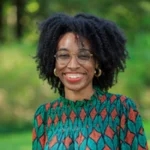
Alexa White, Ph.D., is an award-winning ecologist, environmental justice activist, and science communicator focused on shifting power to frontline communities. She serves as the Think 100% Climate and Environmental Justice Policy Director at the Hip Hop Caucus, where she leads the policy agenda, government relationships, and advocacy strategy across campaigns on fossil fuels, plastics, and clean water. She is also the Cofounder and Executive Director of the Aya Research Institute, which works to increase the number of scientists and engineers of color conducting environmental justice research.
She earned her Ph.D. in Ecology and Evolutionary Biology from the University of Michigan. Grounded in a commitment to food sovereignty, her research portfolio spans the intricate web of social determinants of health and biophysical metrics for sustainable farming. Across roles, she brings rigorous research, sharp policy analysis, and story-driven advocacy together to build campaigns that are scientifically grounded, culturally resonant, and winnable.

Holly Zhou is a Product Marketing leader with more than a decade of experience launching products and shaping narratives across digital healthcare, telecommunications, and video collaboration. She specializes in translating complex ideas into stories that inspire action, and is excited to bring her go-to-market expertise to help Wildlands Network reach and engage new audiences. She currently leads Product Marketing for Logitech for Business, guiding strategy for the world’s leading videoconferencing hardware portfolio.
Beyond her professional work, Holly is a committed advocate for climate and conservation solutions. A graduate of the Climatebase Fellowship, she has deepened her climate literacy and contributed to projects on energy management and sustainable agriculture. She also champions urban environmentalism in the Bay Area, supporting climate-smart development and ecological resilience through the Greenbelt Alliance.
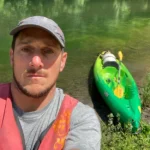
Roberto is a lawyer specializing in environmental conservation, biodiversity, energy, and climate change policies at Vo.Bo., a renowned consulting firm in Mexico City.
Since 1997, he’s been involved in biodiversity conservation, acquiring 26 hectares of tropical rainforest in the Northern Sierra of Puebla, Mexico. In 2005, CONANP certified their land, named “Kolijke,” recognizing its conservation purpose. However, these properties weren’t considered Natural Protected Areas then, limiting eligibility for incentives and international biodiversity targets.
During his time as a Legislative Assistant in the Mexican Senate, Roberto promoted amendments to legislation that recognized voluntarily certified areas as Voluntarily Designated Conservation Areas (ADVCs). This led CONANP to certify 570 ADVCs, covering over 1 million hectares.
Currently, at Vo.Bo., he continues to support policies that strengthen ADVCs. His efforts enabled Wildlands Network to advocate for the Sonora State Congress to approve an amendment incorporating a conservation property right aimed at reinforcing long-term commitment and providing tax incentives for landowners protecting nature.
Roberto holds a law degree from the Universidad Nacional Autónoma de México (UNAM) and pursued additional studies, including a Diploma in Environmental Law and Policy at the Universidad Iberoamericana, and a Master’s degree in Environmental Policy and Management from the Universidad Carlos III de Madrid.

Lucia Ibarra is the Director of Conservation at Dogwood Alliance, a nonprofit organization dedicated to protecting forests while addressing the critical intersections of climate, justice, and nature. With two decades of experience in the conservation and environmental sectors, Lucia is passionate about advancing justice in modern conservation, biodiversity, and climate change policy.
Her career has taken her across the United States, as well as to Africa and Mexico, where she has led impactful campaigns, organized diverse communities, and formed coalitions to protect ecosystems and promote environmental justice. Lucia’s ability to develop strategic relationships with elected officials, funders, partners, and communities stems from her dedication to co-creating solutions that safeguard both the planet and its people.
Lucia holds a Master’s Degree in Leadership Studies with a concentration in Organizational Psychology from the University of San Diego and a Bachelor’s Degree in Wildlife Habitat Management from Arizona State University. She is also an avid scuba diver and volunteers in coral reef restoration. Outside of work, Lucia enjoys hiking, camping, exploring wetlands, live music, and discovering new restaurants and breweries with friends and her dog, Bonsai.
Lucia thrives in roles aligned with her passion and values, leading efforts that inspire and create lasting, meaningful impact for both nature and communities.
Dr. Anne Baker received her B.A. in Zoology from Indiana University, and her M.S. in Ecology and Ph.D. in Sociobiology from the University of Maryland. As part of her doctoral work, she spent seven years in Sri Lanka (Ceylon) studying the development of social behavior in wild primates. She was a Smithsonian predoctoral fellow at the National Zoo in Washington, D.C., Curator of Primates at Brookfield Zoo in Chicago, Director of the Rosamond Gifford Zoo in Syracuse, New York, and CEO/Executive Director of the Toledo Zoo from 2006 until her retirement in 2012. She has served on the board of the Association of Zoos and Aquariums and was its first woman president in 50 years. She is an honorary member of the World Association of Zoos and Aquariums and in 2014 received its highest honor, the Heini Hediger award. While in Toledo she served on the Boards of the Boys and Girls Club and Toledo Children’s Hospital. Following her retirement Dr. Baker has continued her commitment to conservation, serving as the Executive Director of the Amphibian Ark (a small, international NGO), a member of the IUCN SSC Conservation Planning Specialist Group, and a board member and board president of the Downeast Coastal Conservancy, a Maine land conservancy.
Anne and her husband Bob Lacy have lived in Jonesboro, Maine, with their two dogs since 2012, and enjoy hiking, sea kayaking, birding, and gardening.