The Wild Knows No Borders

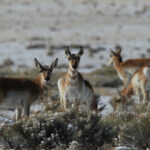
150 years ago, jaguars and pronghorn thrived by following ancient paths through a vast, sagebrush-scattered desert. Today, their descendants are scattered, divided, and imperiled by what’s set to be one of the planet’s longest manmade ecological barriers: the U.S.-Mexico border wall. Fences and roads fracture ecosystems from Canada to Mexico, threatening migrating deer and elk, wolves, mountain lions, and bighorn sheep. That’s why we work to rewild North America by reconnecting wildlife across boundaries.
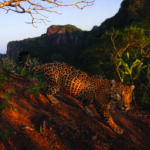
Photo by Alejandro Prieto

Our Approach
Impact Research

We study how barriers divide wildlife populations across North America, generating scientific evidence that reveals where barriers cause the most harm and where solutions will have the greatest impact.

Policy Advocacy

We work to elevate the consequences of human-built barriers on wildlife to decision-makers, from U.S.-Mexico border walls to the roads that fragment habitat across the continent.

Partnerships

Alongside state and federal land managers and partners, we research, mitigate, and open pathways between wildlife and the resources they need to thrive.

Project Spotlight

The Border Wall

The U.S.-Mexico Border Wall

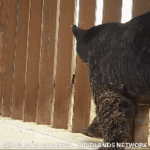
Our research shows that the border wall reduces wildlife movement by 86%. Large animals like black bears and deer can’t pass at all. We’re studying the wall’s impact on jaguars, mountain lions, bighorn sheep, and other species in California and the Sky Islands Region, and building the case for wildlife passages and other connectivity solutions.

Learn About the Border Wall

Wildlife & Solar

Energy Development & Pronghorn

We’re studying the impact of utility-scale solar development on pronghorn across a patchwork of federal, state, Tribal, corporate, and private land. We use that data to provide recommendations to land managers and push for policy that ensures wildlife is part of the planning process.

Explore the Four Corners Project

U.S. Route 395

Road Crossings & State Lines

U.S. 395 cuts through critical migratory pathways for mule deer and essential habitat for mountain lions along the California-Nevada border. We’re supporting the construction of wildlife crossings over and under the highway to restore safe passage and prevent the genetic isolation that threatens mountain lion populations.

Learn About US 395

Pathways for Wildlife

Our Goals

Wildlands Network is uniting people across borders to restore ancient ecosystems between Mexico, the U.S., and Canada.

By 2030, we aim to:

  • Increase the number of small and large wildlife openings along the U.S.-Mexico border wall.
  • Help assess or modify 1,000+ miles of fencing for the free movement of wildlife populations.

Wildlands Network & Sky Island Alliance

Work Across North America

Informed by strategy and local partnerships, connectivity looks different everywhere we work.
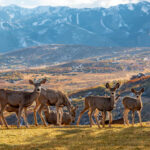
Fencing & Deer in Utah

In Utah, barbed-wire fences lining public and private land trap and kill elk, deer, pronghorn, and other species. We’re researching and remediating fences across public and private land to protect them.

Building Community Between Canada & Maine

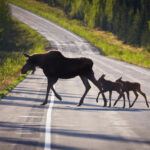
Working on regional connectivity between Maine and New Brunswick to reconnect habitat for lynx and moose.

Sign the Pledge

Together, we can restore the pathways wildlife need thrive. Help us restore movement across North America.

Sign now