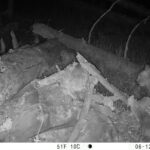
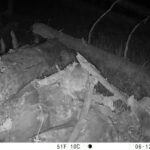
CARSON NATIONAL FOREST, N.M. – A Wildlands Network camera here has captured the first Canada lynx documented in New Mexico in nearly fifteen years, New Mexico State University announced.
The camera is part of a survey of 120 sites across the forest for a two-year study that Wildlands Network runs with New Mexico State University. William Grooms, an NMSU Ph.D. student whose research Wildlands Network is jointly funding for two years, found the lynx while reviewing the summer’s photos. Experts confirmed the identification.
“This study grew directly out of our marten research in the San Juan Mountains, and this is the first lynx we’ve documented since that work began,” said Aaron Facka, Senior Wildlife Biologist at Wildlands Network. “It’s crucial for forest managers to have science-based evidence of which animals are actually using these forests.”
Lynx live in deep-snow, spruce-fir forests and depend on snowshoe hares, which shelter under downed logs and dense understory vegetation. Forest managers often thin those same conditions to reduce wildfire risk.
 NMSU / Wildlands Network
A Wildlands Network trail camera in Carson National Forest photographed this Canada lynx this summer
 NMSU / Wildlands Network
It’s the first documented in New Mexico in nearly 15 years. NMSU announced the find Oct. 23.
“These types of forests and conditions are often targeted for hazardous fuel removals, because when they do catch on fire, they contribute to big fires,” Grooms said in NMSU’s announcement of the find. “But these are the types of conditions, though, that really are important to both the Canada lynx and the snowshoe hare.”
The study tracks 10 species and measures the forest structure each one prefers. The goal is to give forest managers science-based guidance on how fuel-reduction treatments and timber harvesting affect wildlife. Grooms will return to the field next summer for a second season.
Related Posts
 CEDES / Ricardo García