Borderlands
wildlife face an
unprecedented barrier

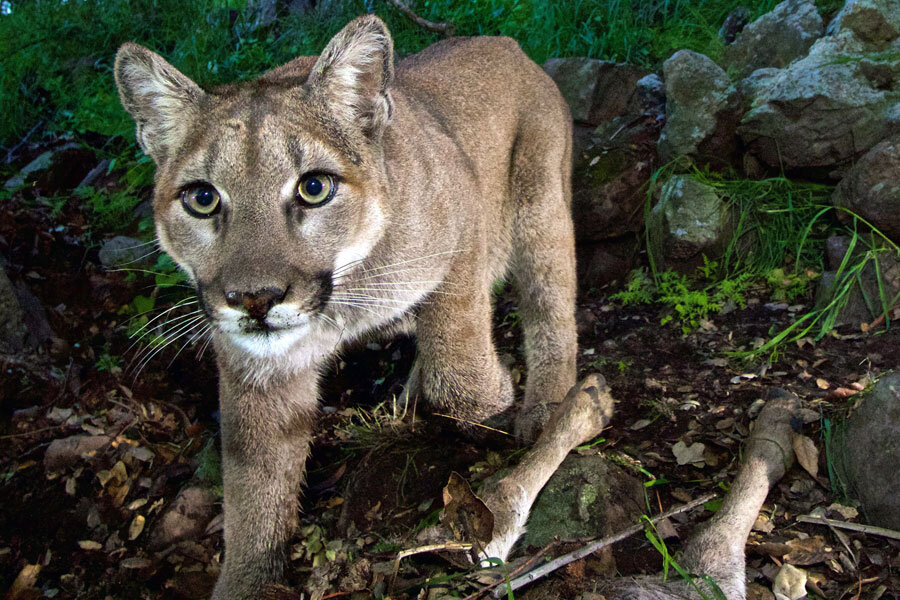
Under the cool, dark cover of night, a female mountain lion and her three cubs traverse the Sonoran Desert. They weave through Saguaro cactus, creosote bush, and prickly pear, the hum of cicadas covering their soft footfalls.

Sky Islands Alliance & Wildlands Network

The female mountain lion and her cubs soon face a barrier they can’t leap or climb over —

30 foot-tall steel beams of the U.S.-Mexico border wall, stretching for miles in either direction.

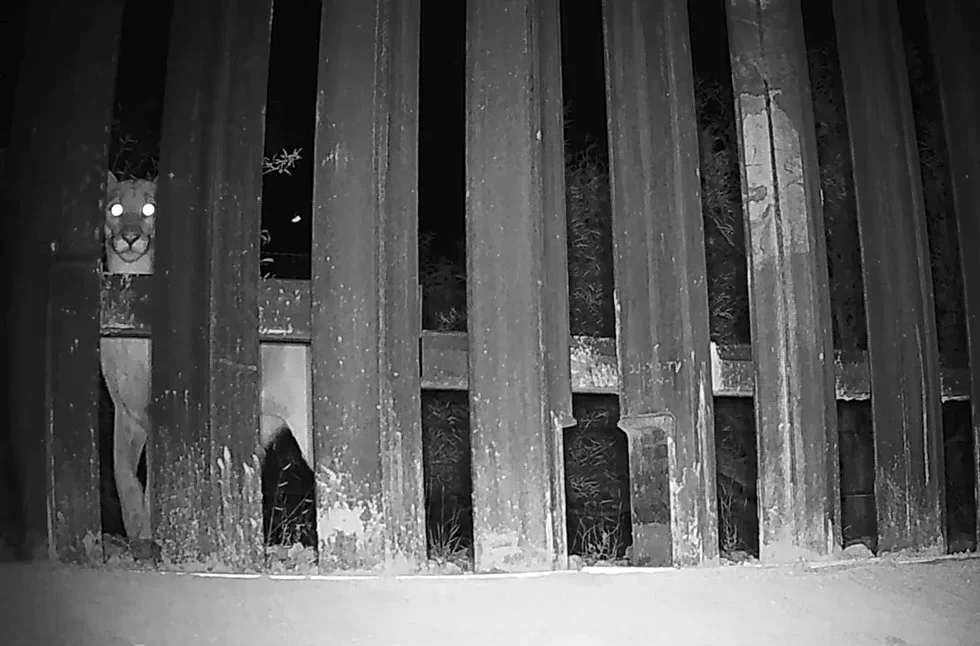
But the mother mountain lion notices something different about this section of wall: two of the beams sit a little further apart at the base than the rest, making an opening the size of a piece of printer paper. She walks toward the opening, crouches on her forelegs, and eases through to the other side in one smooth movement. The cubs trot through soon after, two through the wider opening, and one through a standard 4-inch opening nearby.

Field data collected by Wildlands Network is documenting the impacts of the new border wall on wildlife whose ancestors have traversed the landscape for thousands of years.  Our data show that mountain lions attempting to cross the border are not always as lucky as the mother and her cubs. Male mountain lions cannot fit through such small openings.

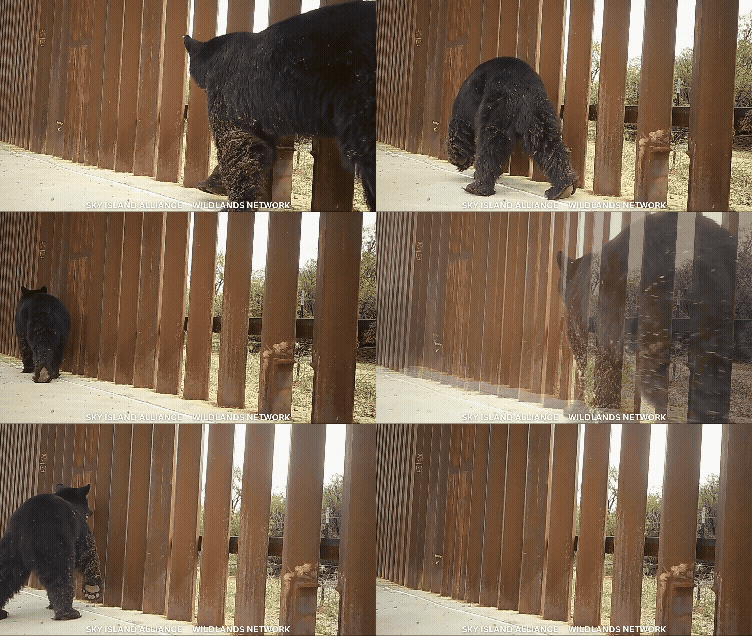
One study showed a 100% reduction in the crossing of large wildlife species such black bears, wild turkeys, and deer for sections of steel bollard-fencing border wall that lack wildlife openings. Without intervention, this will be the norm in the borderlands: new, long sections of border wall offering few — if any — passages for wildlife, with more wildlife than ever before finding their movements interrupted.

Sky Island Alliance/Wildlands Network
What’s at stake?
A rich, biodiverse tapestry

The borderlands is home to a tapestry of protected areas, including private conservation easements, and city, state, tribal, and federal protected lands. The varied landscape, from waterways and valleys to plateaus and mountains, supports an array of plant and animal life.

Southern California’s inland desert regions boast some of the highest concentrations of reptile biodiversity in the state

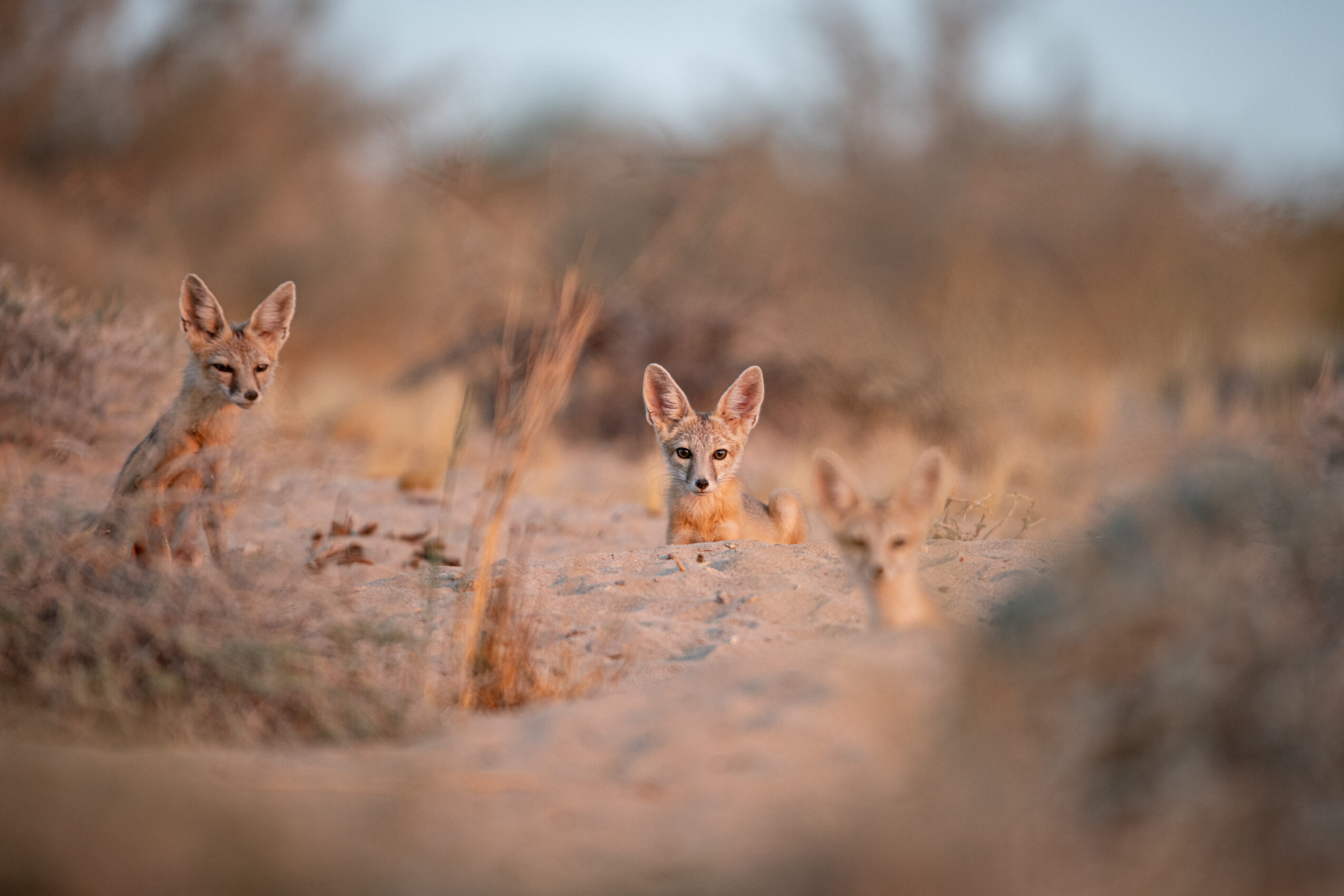
Species primarily found in Baja California, like Switak’s banded gecko, Cope’s leopard lizard, and Baja California ratsnake are only found in the U.S. within the California borderlands. The Jacumba Mountains Wilderness, which links the Peninsular mountains across the California-Mexico border, is the home of the endangered Peninsular bighorn sheep, which relies on resources on both sides of the border for its survival. Additional species such as kit fox, mountain lion, and the elusive ringtail cat roam the area.

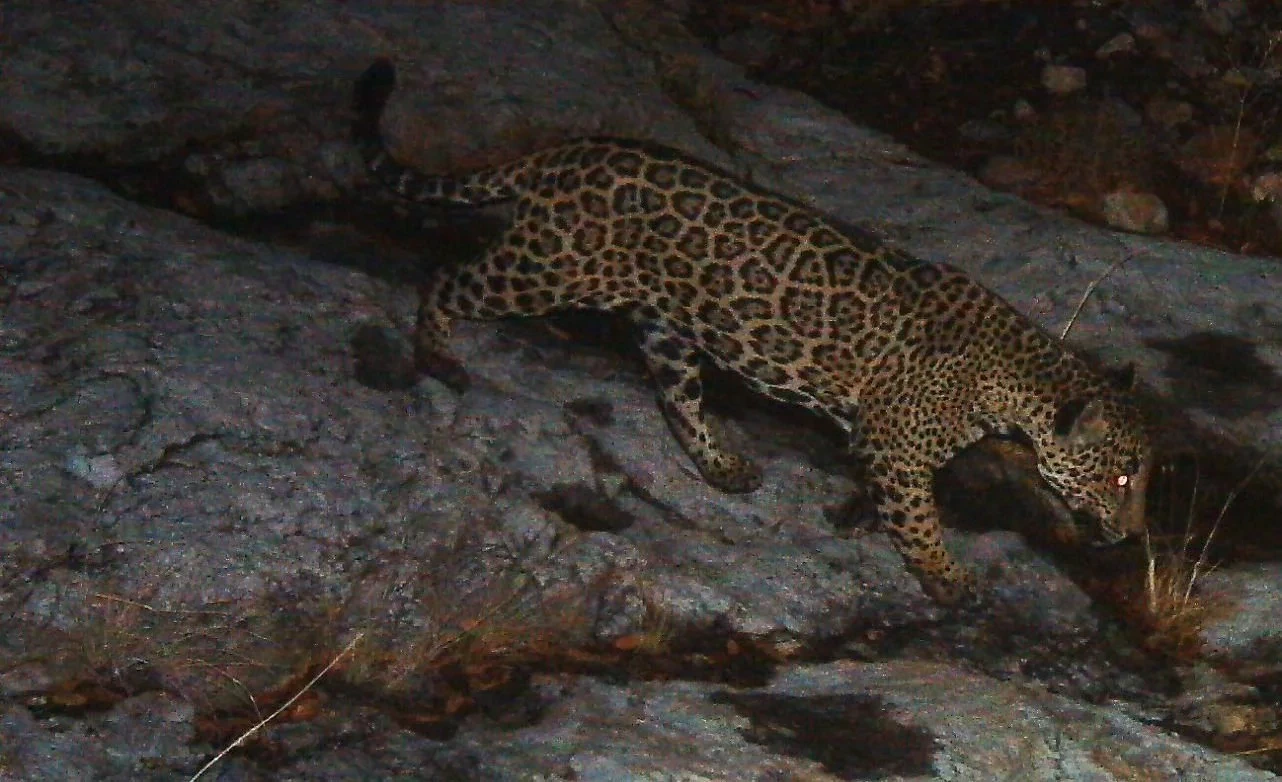
Further east, jaguar and ocelot have been spotted within one mile of Coronado National Memorial in Cochise County, Arizona. Recreationists are drawn to the park’s diverse habitat, from grasslands and oak forests to mountains, and the opportunity to see a range of bird species. In addition to preserving 4,750 acres of biodiverse desert habitat, the park marks where the Coronado Expedition, a group of Spanish explorers and Aztecs, first entered northwestern Mexico.

In the San Bernardino National Wildlife Refuge, a few miles west of the New Mexico border, the Rio Yaqui feeds a network of wetlands in the otherwise arid desert landscape. The 2,800-acre refuge, maintained by the U.S. Fish and Wildlife Service, was first established to protect fish native to the Rio Yaqui. Reptiles like whiptail and Madrean alligator lizards, and mammals like bobcats, jaguars, and gray wolves navigate the watershed’s microclimates. One of the most biodiverse refuges in Arizona, San Bernardino National Wildlife Refuge provides habitat for over 330 birds, 67 mammals, 43 reptiles, and 14 amphibians, according to the refuge’s website. The Rio Yaqui’s wetland oasis extends south into Mexico, where it’s protected by another refuge, Rancho San Bernardino.

Borderlands areas like these have an important role to play in North American conservation broadly. Wildlands Network began our journey as an organization with a vision for creating large wildways — north-south, interconnected habitat and protected areas that allow diverse species to persist and wildlife to roam freely over vast terrain. The borderlands region serves as an important link in the Pacific Wildway and Western Wildway.

We’re documenting the consequences,
and advocating for change

Wildlands Network’s research in the borderlands region prior to the wall’s installation catalogued the complex migration patterns of wildlife that call this area home. With a new wave of wall construction underway, we’re documenting new construction itself, and using trail camera photos and video footage, GPS tracking, and other tools to monitor how wildlife respond to the new barrier. This work is time and resource intensive, with researchers traveling frequently to remote areas to conduct research and retrieve camera trap data.

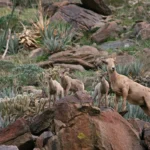
A Peninsular bighorn ram stands alert in arid desert scrub, his curved horns and amber eyes visible against a backdrop of dry ocotillo.

Two decades ago, a key law gave the federal government a pass to ignore bedrock environmental protection laws in the name of border security…

Although the U.S.-Mexico border was established in 1848 via the Treaty of Guadalupe Hidalgo, it existed for most of that time as a boundary largely on paper. The Rio Grande served as a natural barrier in sections, with others occasionally marked with low fencing.

In 2005, Congress passed the Real ID Act, following a recommendation from the 9/11 Commission to create security standards for drivers licenses. In addition, the act gave the executive branch power to waive local, state, and federal laws in service of expediting border wall construction. At the time, the goal was quick construction of a section of border wall near San Diego.

Since then, each subsequent administration has drawn from that part of the Real ID Act to ignore dozens of environmental regulations, like the Endangered Species Act and the Wilderness Protection Act, in favor of border wall operations and construction. Such laws were intended to protect wildlife populations and sensitive habitat by limiting or prohibiting activities that contribute to population decline and landscape degradation and destruction.

When Donald Trump was elected president in 2016, he campaigned with a promise to construct a wall along the U.S.-Mexico border. About 450 miles of new border wall saw construction between 2017-2021, and even more construction is underway following Trump’s reelection in 2024. New border wall construction is permanently reshaping landscapes as crews blast apart rock, mountains, and plant life to make way for the installation of steel bollards, concertina wire, and other fencing materials. In Coronado National Memorial, the final mile of Arizona Trail closed in April to protect park visitors from dynamite blasts underway during wall construction.

"Environmental monitoring related to border wall work is lackluster at best. Whether surveys happen is at the discretion of the Department of Homeland Security, and they tend to be limited in scope and time, resulting in very few environmental mitigations and protections. There are minimal opportunities for public involvement and external accountability measures."

Myles Traphagen

What our cameras saw

Our study with Sky Island Alliance found the border wall already cut wildlife crossings by 86% compared to vehicle barriers alone.

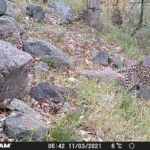
Camera traps along the border have caught deer, mountain lions and coyotes reaching the wall, only to find it impassable. Some smaller animals are still able to pass, though the majority of large animals such as adult black bears are not. A proposed second wall would close the small openings still letting a few through, likely pushing that number even higher.

A More Robust Border Wall Means Fewer Wildlife Crossings

With the border wall in its current form, and additional length being added each day, wildlife in the borderlands face a wide array of impacts to their survival.

A 2024 study by Wildlands Network and the Sky Island Alliance of 100 miles of border wall found that only 9% of wildlife interactions with the wall led to a successful crossing, compared to a 65% success rate when encountering vehicle barriers at the border.

Mountain lions in areas isolated by development and roads in California show signs of genetic inbreeding. A partially open border has allowed some cats to cross into Baja California, allowing for a sharing of genetic information. But with 85% of the border wall in California complete and construction underway to close remaining gaps, southern California’s lions may be cut-off from this source of valuable genetic material for good.

A 2022 study found that as jaguars attempt to reach desert springs north of the border — a key water resource for the species in its northernmost range — border wall infrastructure significantly increases the amount of energy jaguars must use to reach the water. Even smaller wildlife species, like bobcats and badgers, seem hesitant to pass through walls with only 4-inch-wide openings.

In California, a continuous border wall would severely impact the movement and survival of Peninsular bighorn sheep. Our analysis of GPS tracking data shows that the sheep spend roughly half of their time in each country, with prime habitat for raising lambs in the U.S., critical water sources in Mexico, and valuable forage plants spread throughout the borderlands. [306]

Animals of all types and sizes are being impacted daily by the border wall. How significant the impacts are and how we can address them are the critical research questions that lie before us as we aim to find solutions to this crisis.

Our research informs science-based, wildlife-friendly border wall solutions

Wildlands Network’s research in the borderlands offers critical insight into the impacts of the wall on wildlife populations in the remote border region. By continuing to monitor species movements and genetic diversity, we are building evidence in support of solutions to mitigate the impacts of the wall and bolster wildlife survival.

Like the mountain lion and her cubs who passed through a paper-sized opening, many species large and small depend on wall openings to reach food, water, shelter, and mates. Without connectivity, populations become isolated, genetic diversity erodes, and local extinctions follow. Though some openings exist, even more are needed to support wildlife populations.

Myles Traphagen

From Big Bend to San Diego, communities are calling for more wildlife-friendly border solutions — and we’re working to provide the data needed to shape them.

In 2023, a coalition of environmental groups settled a long-running lawsuit regarding the funding used to construct parts of the border wall. One condition of the settlement required the U.S. Customs and Border Protection to install additional openings for wildlife connectivity in the wall. Because Wildlands Network had produced high-resolution, accurate maps of the border wall, we were able to provide scientifically sound, technical advice for the siting of wildlife passages to both the plaintiffs and defendants of the lawsuit.

In addition to piece-of-paper-sized openings, our research shows that wildlife, from coyotes to large mountain lions, will use open floodgates in the border wall to cross to the other side. Keeping those open with more frequency bolsters wildlife passage, and installing additional openings ensures plenty of pathways for easy crossings.