Two years of surveys on US 64 and 264 recorded 7,843 road-killed animals from 163 species.
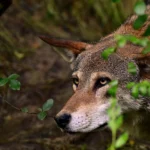
COLUMBIA, N.C. — Nov. 18, 2026 — A new report from Wildlands Network highlights data from the first two years of a roadkill monitoring survey in and near Alligator River National Wildlife Refuge, home to the core wild population of critically endangered red wolves in North America.
The roadkill research serves several purposes. It keeps the highway clean of road-killed animals that attract scavenging red wolves, helping prevent vehicle strikes, the leading cause of death for the species.
The data also provides a baseline of local species in the area, which will be used to evaluate the success of the wildlife underpasses planned for US 64, and to guide where future ones are built.
Wildlands Network staff have conducted roadkill monitoring surveys every weekday since August 2024 on US 64 and 264. US 64 is a busy roadway that carries beach-bound tourists through the refuge, connecting the mainland with the Outer Banks, which see 7 million visitors each year.
Key Findings
Over the two-year survey period, only two red wolves were killed by a vehicle along the survey route compared to 12 killed between 2020-2024, before the project began.
Researchers observed 7,843 instances of road-killed vertebrates along US 64 and US 264, representing a total of 163 vertebrate species. The research took place in Tyrrell and Dare counties, which saw similar levels of roadkill. Staff recorded 3,641 roadkill observations in Tyrrell County and 4,202 in Dare County.
Reptiles and amphibians were more abundant during warmer months, with a total of 1,421 snakes, 1,839 turtles, and 2,587 frogs recorded as roadkill. Compared to studies conducted on the route between 2008-2011, staff appear to be observing significantly fewer road-killed amphibians.
Researchers observed more road-killed birds in the colder months, with a total of 1,194 road-killed birds recorded.
Mammal roadkill remained relatively steady from season to season; researchers observed 766 total road-killed mammals in the two-year period.
Looking Ahead
The first underpasses will be funded by a $25 million federal grant NCDOT secured in 2024, with help from $4 million in matching funds raised by Wildlands Network and the Center for Biological Diversity.
Wildlands Network plans to continue roadkill surveys at least one more year, through the end of July 2027. Construction of wildlife crossings on US 64 is not expected to begin until 2028. Once the crossings’ construction is completed, Wildlands Network plans to conduct additional surveys to evaluate the impact of the structures on reducing wildlife-vehicle collisions.
See Full ReportAbout Wildlands Network: Wildlands Network is a nonprofit conservation organization based in Salt Lake City, Utah, with a mission to restore, reconnect, and rewild nature across North America so that life in all of its diversity can thrive. The group employs a mix of cutting-edge wildlife science and effective local, state, and federal policy solutions, with a particular emphasis on helping wildlife cross busy highways.
For more information, contact: Dr. Ron Sutherland, Chief Scientist | 919-641-0060, [email protected]
Related Posts
 Wildlands Network / National Parks Conservation Association
 Ron Sutherland